



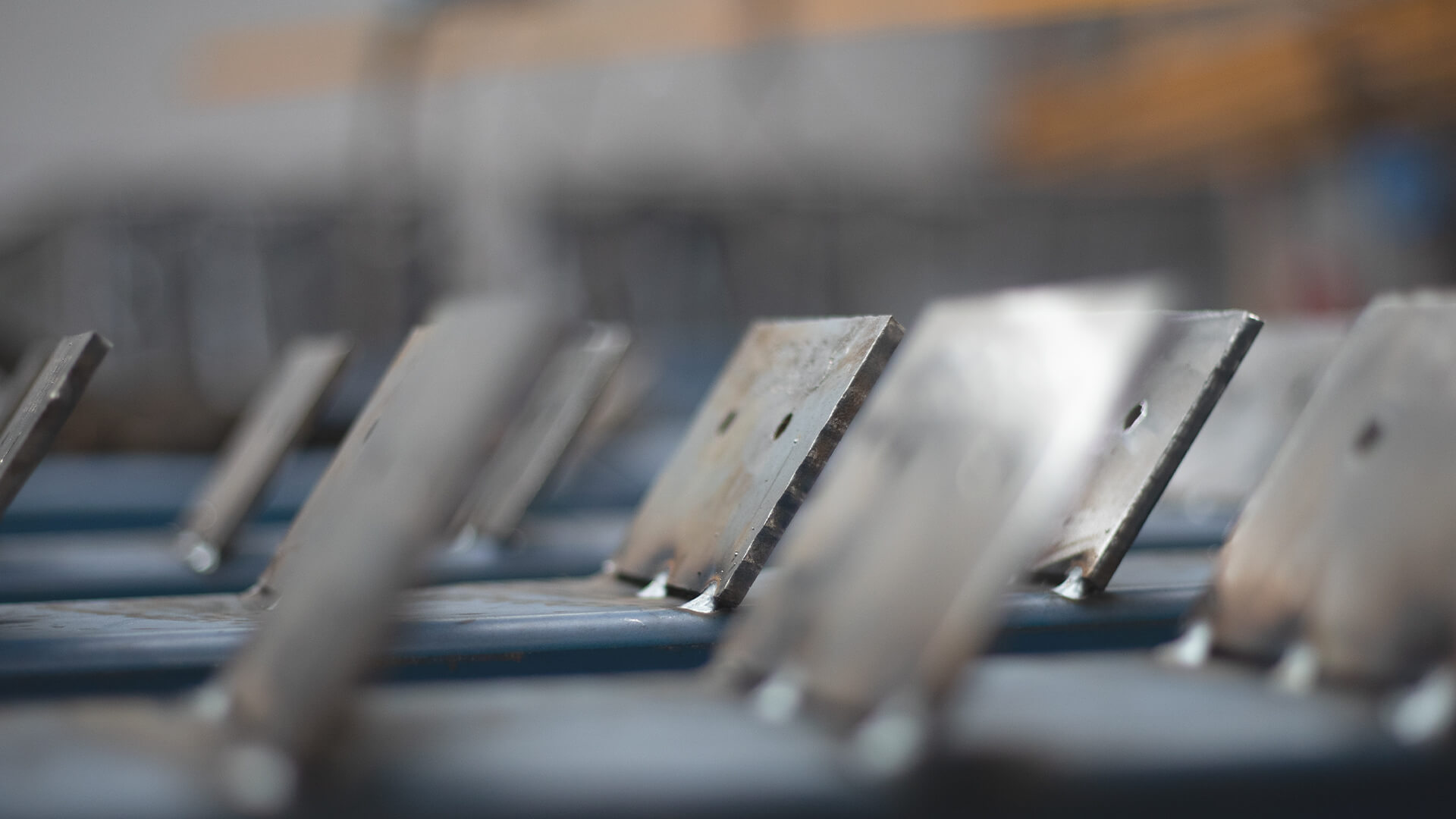
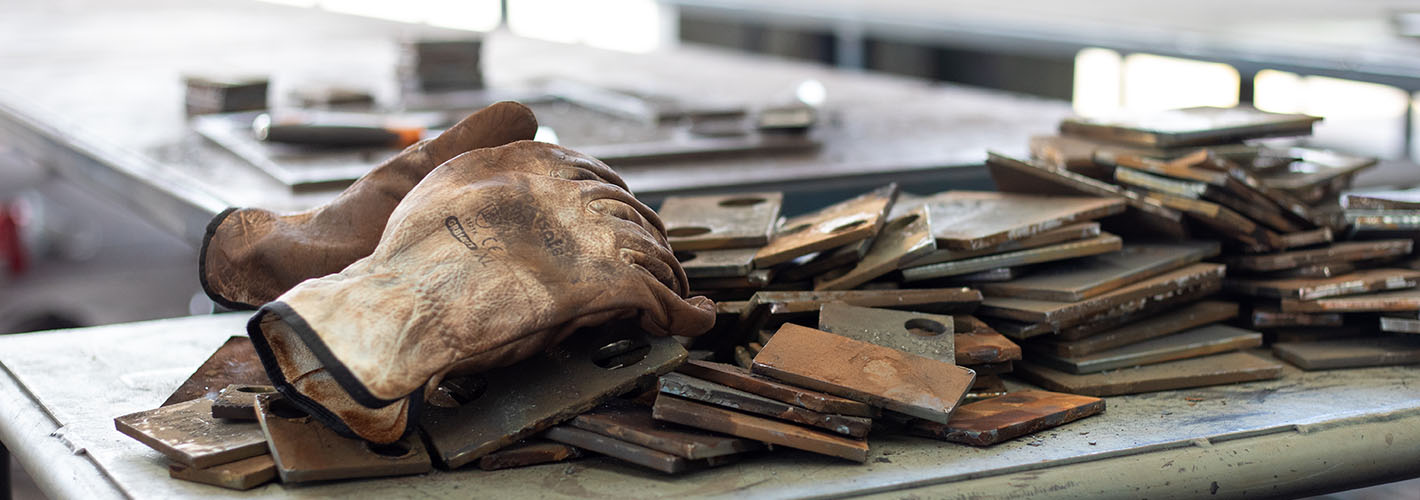


At BridgeFab, we take care of the entire steel processing phase in Brisbane to ensure our steel meets the highest standards. All of the steel we receive is made from 100% Australian iron ore, ensuring quality from the ground up.
What is Steel Processing?
At BridgeFab, when we receive basic steel sections and plates, they are stored for processing. Often, the steel arrives with dirt or surface impurities, which can make fabrication more difficult.
Our team cleans the steel before fabrication to provide a suitable finish, making drilling, welding, and other processes more efficient. This cleaning process ensures that every project starts with steel that is durable, consistent, and ready for precise fabrication.
Shot Blasting and Prefabrication Primer
To achieve a clean finish, we carry out shot blasting—a process where a high-speed stream of steel particles is directed at the steel surface. This removes dirt, rust, and mill scale, leaving a clean and smooth surface. After cleaning, a prefabrication primer can be applied to protect the steel and maintain its quality during fabrication.
Cutting, Bending, and Fabrication
Once cleaned, the steel is cut to the correct sizes and prepared for bending, drilling, and shaping into structural steel beams, framing, wall panels, roof panels, purlins, girts, and more.
Some steel is fabricated into door and window frames, staircases, railings, and other architectural elements.
Why Choose BridgeFab for Steel Processing in Brisbane?
BridgeFab combines advanced technology, skilled craftsmanship, and quality Australian steel to deliver precise steel processing services in Brisbane. From preparation to fabrication, we ensure every component meets client specifications. By managing the entire process in-house, we reduce delays, maintain quality control, and provide a smoother project workflow.
Whether your project is commercial, industrial, or architectural, our steel processing capabilities in Brisbane provide the foundation for reliable, high-quality steel construction.
Contact BridgeFab Today
To find out more about our steel processing services in Brisbane or to request a quote, contact our team today.
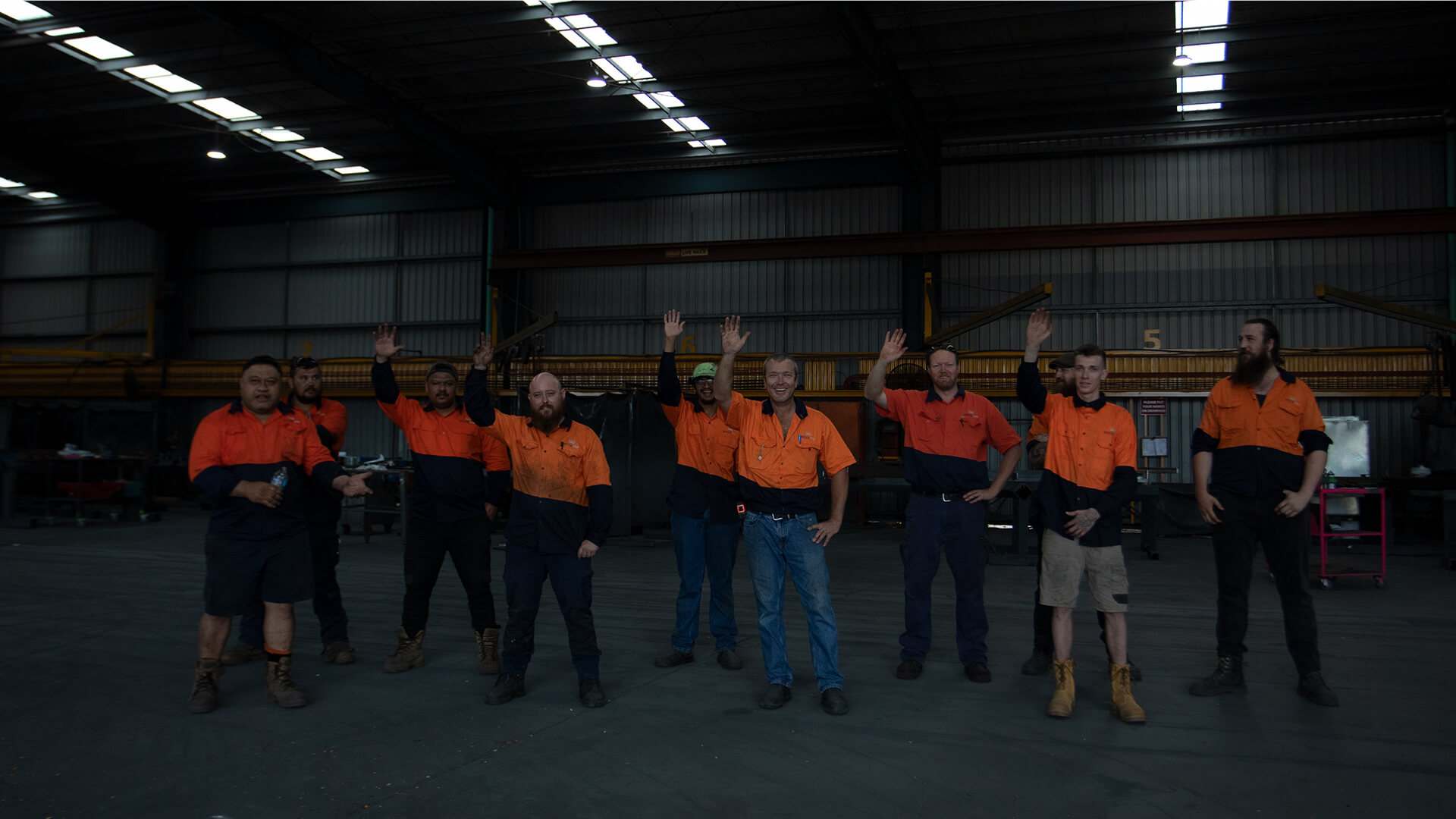


How modern steel processing technologies help us
The steel processing industry is transitioning into a new and exciting phase through modern machinery and emerging technologies.
While traditional methods will always remain at the foundation of metal processing, new advancements have revolutionised the industry by:
- Reducing project inefficiencies
- Reducing supply chain concerns
- Reducing steel wastage
- Reducing overall costs
Through investing in new technology and machinery, a select number of structural steel companies in Australia, and around the world, have now positioned themselves as industry leaders and innovators in the steel processing industry.
The intersection between technology and reality
New machinery allows industry innovators to tackle jobs with greater efficiency and reduced labour, and this is made possible through the intersection between technology and material-reality.
Modern steel processing machinery works seamlessly with advanced drafting and imaging technologies.
Essentially, information and data can be read by the new machinery and translated into reality with reduced inefficiencies and increased precision.
Simplifying the supply chain
At BridgeFab we oversee projects from planning, drafting, fabrication and erection. The entire supply chain is simplified by our team organising the steel process as a whole. This makes it easier for our clients.
Reduced labour, reduced costs and competitive prices
While this unprecedented technology and machinery is a large investment for a steel processing company, it often means reduced costs and labour for our clients.
By reducing labour, human error and streamlining the supply chain process, and advanced metal processing company can provide a quote that is competitive, if not unbeatable.
The bottom line? It’s well worth your time and money to seek the services of an advanced steel processing company, or at the very least, get a quote.
Contact BridgeFab today
BridgeFab is one of only a few advanced steel processing providers in Australia, investing in new state-of-the-art technology and machinery, and pushing the steel processing industry in this new and exciting direction. If you’ve got any questions about the services provided by BridgeFab, please don’t hesitate to get in contact.
Frequently Asked Questions
Steel processing involves cutting, forming, joining, machining, heat treatment, surface treatment, precision machining, and inspection to transform raw steel materials into usable products or components for various industries.
Shot blasting is a surface preparation process that involves propelling abrasive materials at high velocity onto a surface to remove contaminants and prepare them for further processing or coating. It is commonly used in industries such as automotive, aerospace, construction, shipbuilding, and metal fabrication.
Steel processing is important because it allows for customisation, enhances mechanical properties, enables joining and assembly, provides surface protection, ensures precision and accuracy, assures quality, and offers versatility in creating steel products for various industries.
Steel processing reduces waste in several ways by optimising the use of materials, increasing precision, and incorporating recycling methods. First, advanced cutting techniques such as laser cutting and plasma cutting allow for highly accurate cuts, minimising scrap material by ensuring that steel sections are cut to the exact specifications needed. These technologies enable manufacturers to optimise cutting patterns, utilising the maximum area of the steel sheet or plate. Computer Numerical Control (CNC) machines further reduce waste by precisely shaping steel components, eliminating the need for additional material removal or rework. Additionally, steel recycling is a significant part of the steel processing industry; scrap steel from previous projects can be melted down and reused, reducing the need for new raw materials and cutting down on environmental impact. Efficient material handling and inventory management also play a role, as they ensure that only the necessary amount of steel is processed, reducing excess production. In short, steel processing improves material efficiency through technological advancements, better design practices, and recycling, contributing to both cost savings and sustainability.
There are several types of steel used in processing, each designed for specific applications. Carbon steel, which comes in low, medium, and high carbon varieties, is widely used for structural beams, pipes, and automotive components due to its strength and formability. Stainless steel, known for its resistance to corrosion, is used in industries like food processing, medical instruments, and architecture. Alloy steel, which includes both low and high-alloy variations, provides enhanced strength and toughness for heavy-duty applications like turbines and pressure vessels. Tool steel is highly durable and used for manufacturing cutting tools, dies, and moulds. High-strength low-alloy (HSLA) steel is commonly used in construction and machinery for its balance of strength and weight. Microalloyed steel offers increased strength for automotive parts, while electrical steel is ideal for components like transformers due to its magnetic properties. Finally, weathering steel (Corten steel) is known for its rust-like appearance and resistance to atmospheric corrosion, often used in outdoor structures and sculptures. Each steel type is selected for its specific mechanical properties, such as hardness, strength, and resistance to wear or corrosion.
Steel processing at BridgeFab in Brisbane includes cleaning, shot blasting, applying primer, and preparing steel for fabrication. These steps remove impurities and create a consistent surface, making cutting, welding, drilling, and shaping more efficient.
Shot blasting removes rust, mill scale, and dirt, giving the steel a clean, even surface. This helps improve welding quality, coating adhesion, and overall fabrication accuracy for projects completed by BridgeFab.
Steel processing benefits a wide range of industries, including construction, automotive, aerospace, energy, manufacturing, shipbuilding, food processing, and mining. In construction, it provides structural integrity for buildings, bridges, and infrastructure, while in automotive and aerospace, it ensures safety, performance, and durability in car bodies, engine components, and aircraft frames. The energy sector relies on steel for pipelines, wind turbine towers, and power station infrastructure, while manufacturing uses steel for machinery, tools, and industrial equipment. In shipbuilding, steel ensures the durability of hulls and marine equipment, and in the food and pharmaceutical industries, it provides hygienic and corrosion-resistant equipment. Steel processing enables these industries to produce high-quality, reliable, and cost-effective solutions that meet specific demands for strength, safety, and sustainability.
Precision cutting ensures each steel component aligns correctly during installation. This reduces delays, minimises waste, and supports strong structural performance, especially important for industrial and commercial buildings in Brisbane.